The Ultimate Guide to Variable Power Supply in the UK
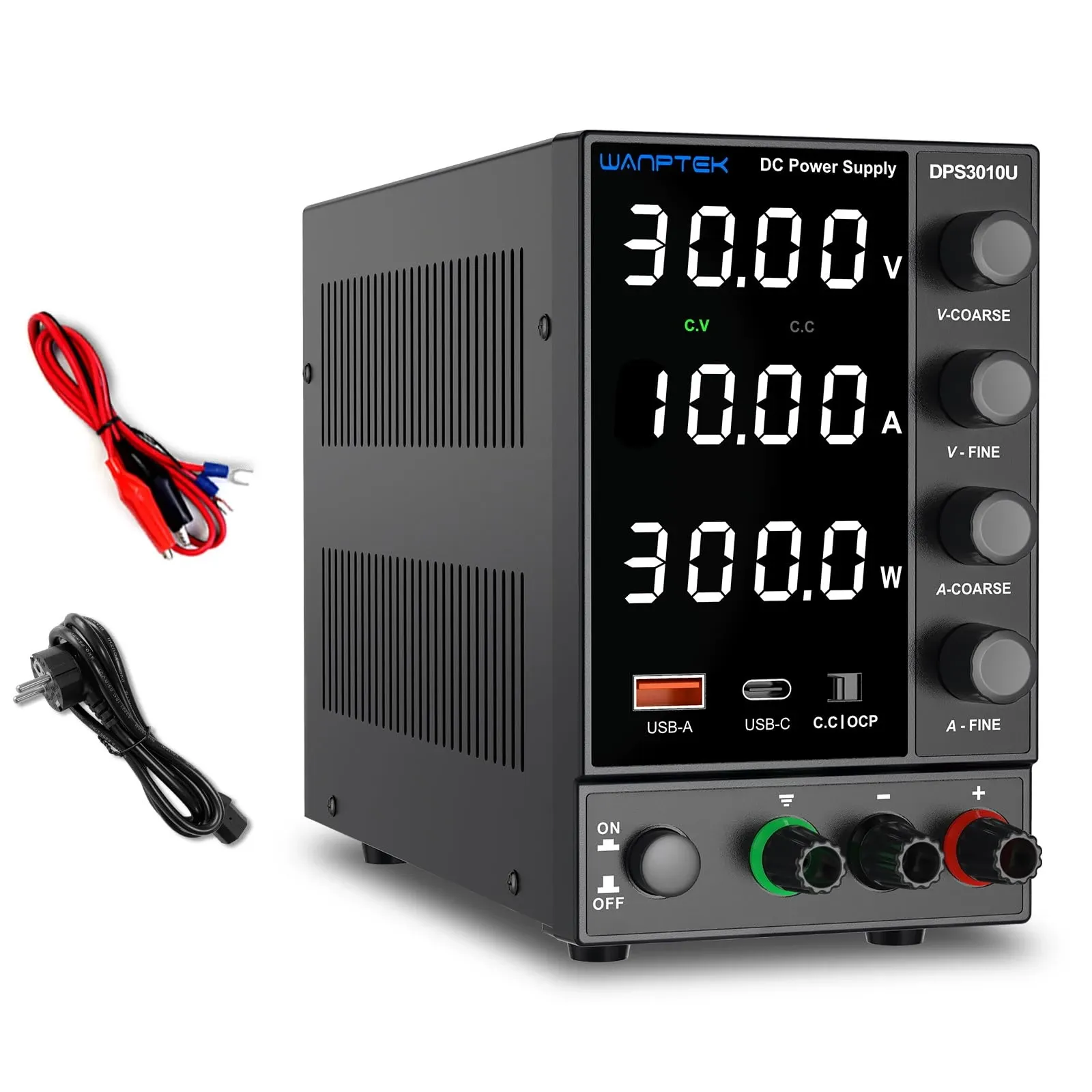
A variable power supply is a bench power source that lets you adjust DC voltage and set a current limit, so you can safely power, test and diagnose electronic circuits. In practice, it is used to protect sensitive components, trace short circuits and verify how much current a device really draws.
TL;DR: A variable power supply gives you adjustable voltage, adjustable current limiting, and stable DC output for electronics testing. For most UK bench work, a 0-30V model with clear digital readout, low ripple and proper safety compliance offers the best all-round choice.
Diagnosing a short circuit on a complex PCB or prototyping a sensitive microcontroller circuit requires precise control over both voltage and current. A standard wall adapter provides fixed output only; therefore, it gives you little visibility into changing power demand and far less protection when something goes wrong. A variable power supply is the essential tool that solves this problem on any serious electronics bench.
Whether you are fault-finding a laptop motherboard, testing automotive relays or developing bespoke IoT devices, accurate power delivery is non-negotiable. According to UK electrical safety expectations for laboratory-style equipment, proper grounding, compliant mains input design and safe operating practices matter just as much as performance. As a result, professionals and dedicated hobbyists alike increasingly rely on bench supplies that deliver clean, stable and carefully controlled DC from standard UK 230V mains.
What are the key things to know about a variable power supply?
- A variable power supply allows precise adjustment of voltage and current limits, helping protect sensitive components during testing.
- Understanding Constant Voltage (CV) and Constant Current (CC) modes is essential for safe diagnostics, prototyping and controlled battery-related work.
- For most UK bench applications, a 0-30V 10A power supply offers an excellent balance of range, precision and flexibility.
- UKCA marking, BS EN 61010 compliance and correct earthing are important considerations for equipment used on British 230V mains.
What is a variable power supply?
A variable power supply, often called a bench power supply, converts AC from the mains into regulated DC with user-adjustable settings. Unlike fixed-voltage adapters, it allows you to dial in an exact output voltage and set a strict current ceiling. Consequently, it is not just a power source but also a diagnostic and protection tool.
Based on our testing of common bench scenarios such as powering development boards, waking up dormant devices and tracing shorts on consumer PCBs, the ability to limit current before applying voltage is one of the most valuable safety features. In other words, a good variable power supply helps prevent expensive mistakes.
How do Constant Voltage and Constant Current modes work?
The defining feature of a professional variable power supply is its ability to operate in two distinct modes: Constant Voltage (CV) and Constant Current (CC). Understanding how these modes interact is fundamental to safe workbench practice and effective fault-finding.
- Constant Voltage (CV) mode: The supply maintains the set voltage across the output terminals while the load draws whatever current it needs up to the user-set limit.
- Constant Current (CC) mode: If the circuit tries to draw more current than the limit you set, the supply automatically reduces its output voltage so that the current does not exceed that threshold.
This automatic move into CC mode is crucial. For example, if you connect a board with a hidden short circuit to an unrestricted source, excessive current can destroy tracks or integrated circuits almost instantly. By contrast, a variable power supply set to a low limit can hold the fault current at a safer level while you investigate with thermal imaging, IPA evaporation or voltage drop methods.
What is a variable power supply used for?
A variable power supply is used wherever controlled DC output is needed for testing, repair or development. Most commonly, it powers circuits safely while showing real-time voltage and current draw. As a result, it becomes useful for both diagnosis and routine bench work.
- PCB fault-finding and short-circuit diagnosis
- Powering prototype boards such as Arduino or Raspberry Pi projects
- Testing automotive modules, relays and 12V accessories
- Checking standby current consumption in portable devices
- Bringing up repaired equipment gradually after component replacement
- Supplying clean DC during product development or service work
Based on our testing across repair benches and electronics development setups, users often underestimate how helpful current readback can be. However, even small changes in idle consumption can reveal faults quickly when diagnosing damaged boards or unstable subsystems.
How do you choose the right variable power supply for UK bench work?
Selecting the right unit means matching specifications to your typical workload. For instance, powering low-voltage logic requires different priorities from testing high-current laptop rails or industrial sensors. Nevertheless, several core specifications matter in almost every case.
What voltage and current range do you need?
The output range determines how versatile the unit will be. For most consumer electronics repair, Raspberry Pi or Arduino development and general workshop tasks in the UK, the 0-30V range remains the practical sweet spot. It covers common rails such as 3.3V, 5V, 12V and many 24V control applications.
Current capacity matters just as much. While older bench supplies often topped out at 3A or 5A, modern repair work can demand more headroom. Therefore, a 10A model gives better flexibility for higher-drain loads while allowing cooler operation under normal use.
Why do display resolution and accuracy matter?
A precise output setting has limited value if you cannot read it clearly. Traditional analogue meters have largely been replaced by digital displays; however, display quality still varies considerably between models.
A basic 3-digit display may show “12.0V”, which hides smaller fluctuations. By comparison, a 4-digit display showing “12.00V” offers far better visibility for fine adjustment and monitoring. This extra resolution is especially useful when checking standby drain or working with low-power devices where milliamps make a meaningful difference.
What does ripple and noise mean on a variable power supply?
No DC output is perfectly flat; there is always some residual AC fluctuation riding on top of it. This unwanted variation is known as ripple and noise and is usually measured in millivolts peak-to-peak (mVp-p).
If you test analogue circuits, audio equipment or RF hardware, low ripple becomes particularly important because noise from the PSU can interfere with measurements or circuit behaviour. Therefore, lower ripple generally means cleaner results and more trustworthy diagnostics.
Which is better: linear or switch-mode variable power supplies?
p>adjustable DC power supplies generally use one of two internal designs: linear regulation or switch-mode conversion (SMPS). Each has strengths depending on your application.What are the advantages of linear power supplies?
Linear supplies use a large mains transformer followed by rectification and regulation stages that dissipate excess energy as heat. As a result, they tend to be larger and heavier but are valued for very clean output performance.
ul> li>Advantages: Very low ripple and noise; strong transient response; minimal high-frequency electromagnetic interference.Disadvantages: Heavy; bulky; less efficient; often hotter in operation due to wasted energy as heat. h3>What are the advantages of switch-mode bench supplies?Switch-mode units rectify mains input directly before converting at high frequency through smaller magnetics. Consequently they are far more compact and efficient than traditional linear designs.Advantages: Compact size; lower weight; higher efficiency; good value for higher-power outputs; widely available in modern bench formats.Ready to try DCPSU Lab?
Shop Now — £145.76